New Collection · October 2026
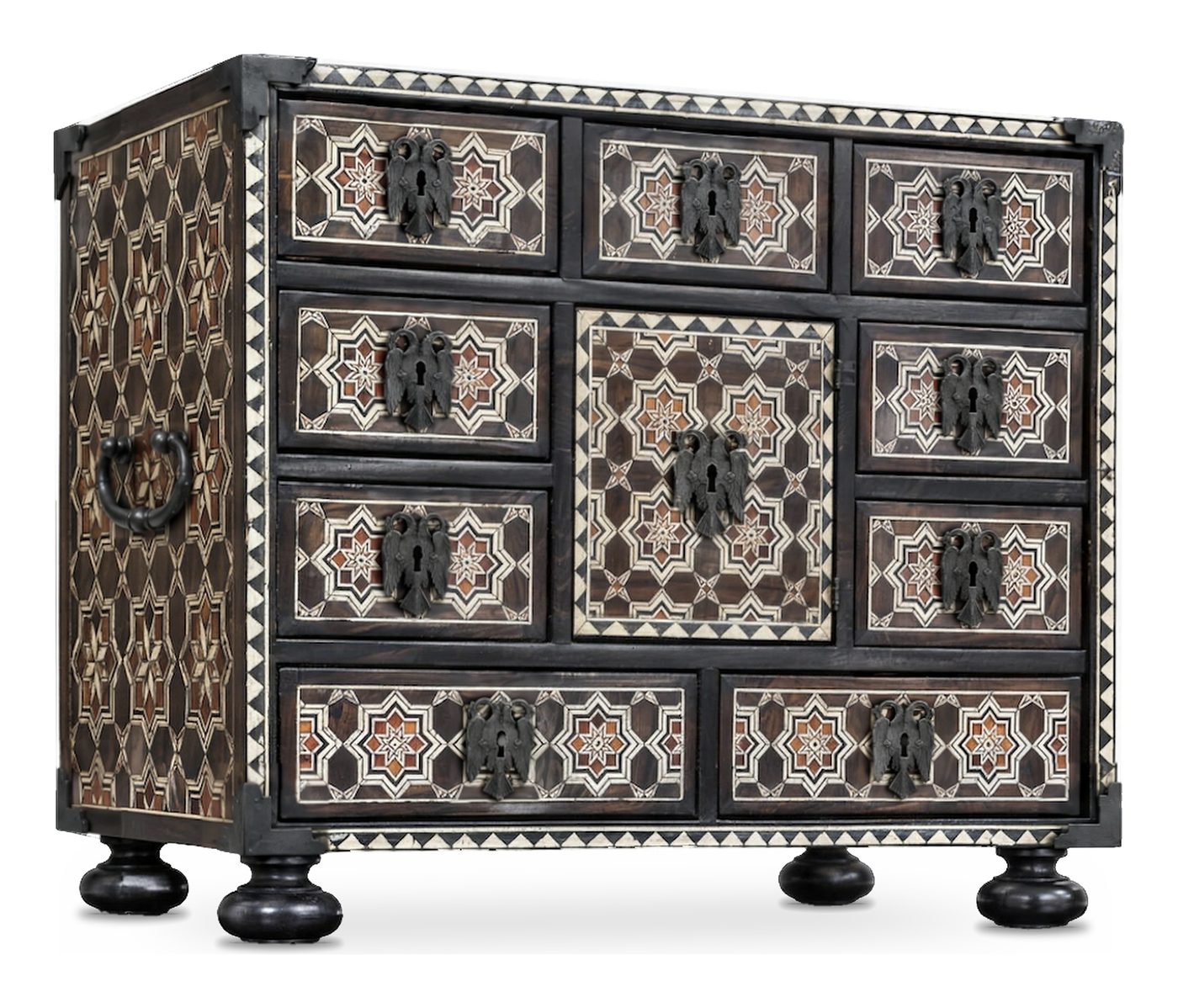
Alcázar Cabinet
Specifications
- Code
- 511 237 02
- Dimensions
- W 28-3/4" · D 17-3/4" · H 24"
FTE 73 · FDO 45 · ALT 61 cm - Materials
- Primavera wood with marquetry in ebony and chechen veneer, faux tortoiseshell, and bone inlay. Antiqued brass hardware.
- Packaging
- Package volume: 0.35 m³ (12.67 ft³)
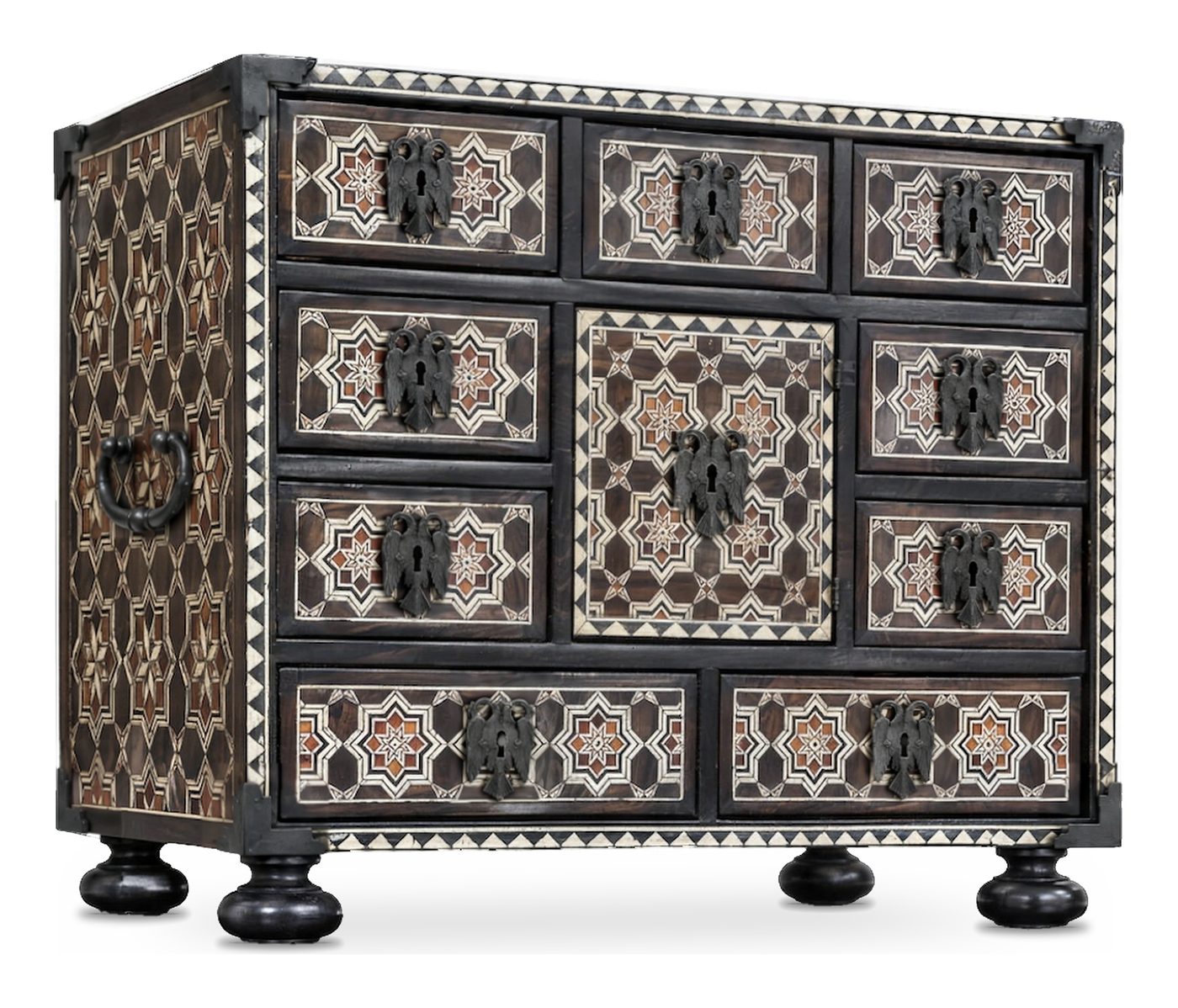
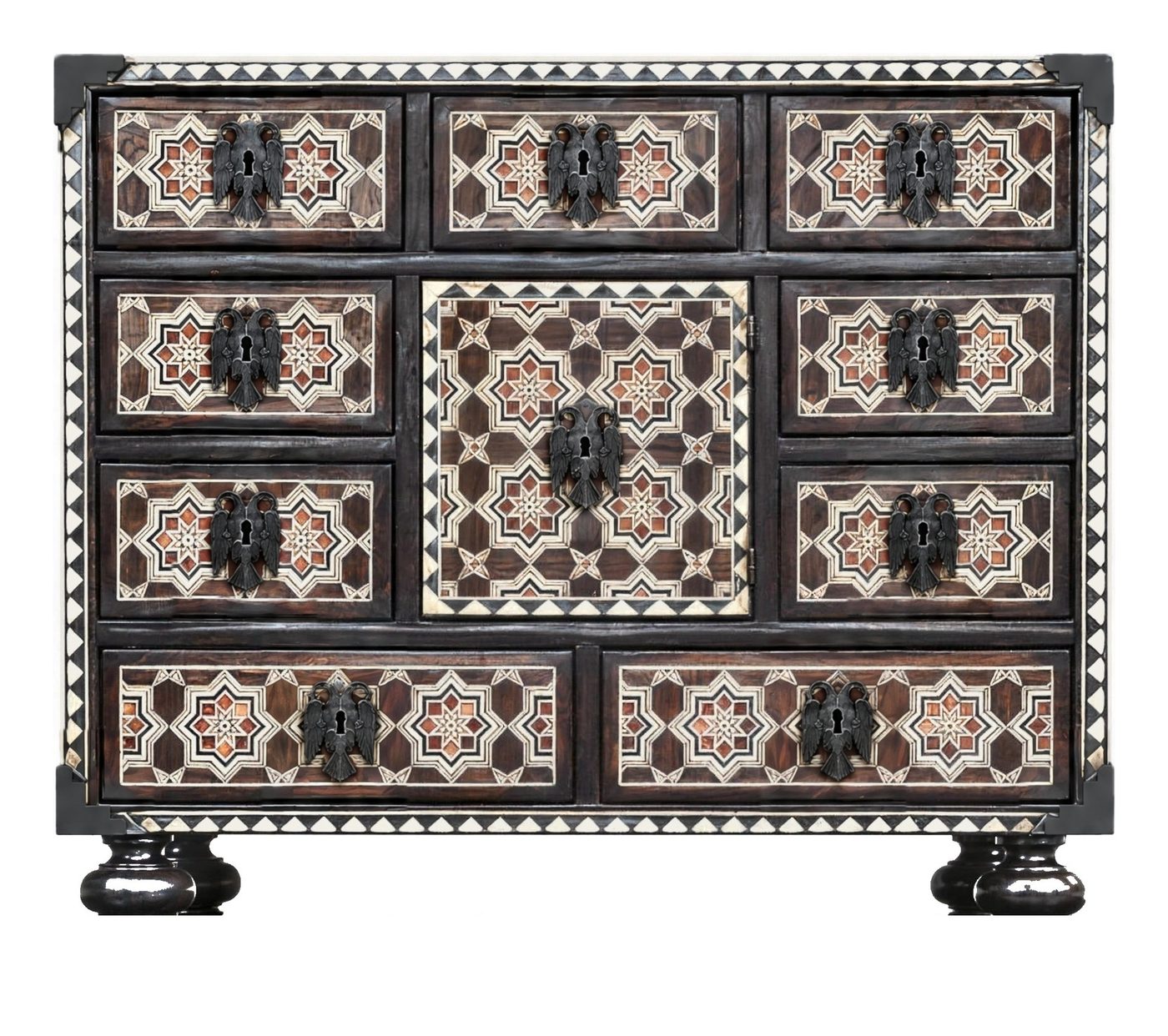
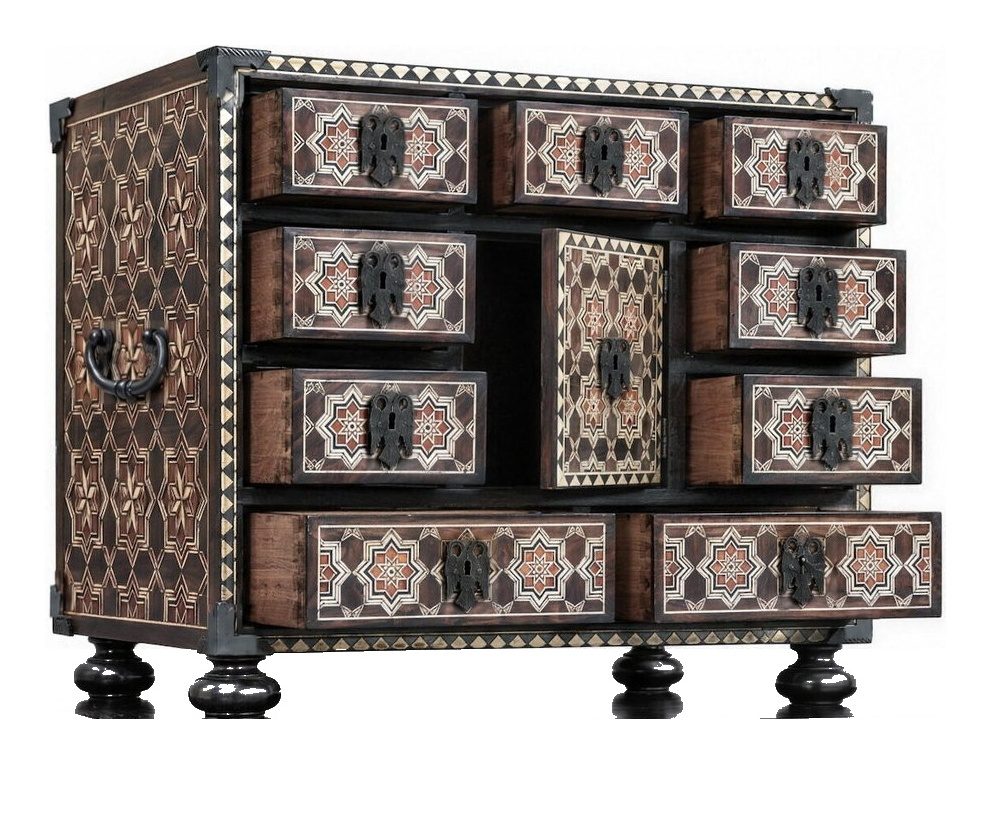
Every angle
The details
The inspiration
Inspired by 17th-century Indo-Portuguese papeleras, the Alcázar Cabinet draws on a furniture tradition that emerged from the meeting of European design and the decorative techniques of Indian cabinetmakers.
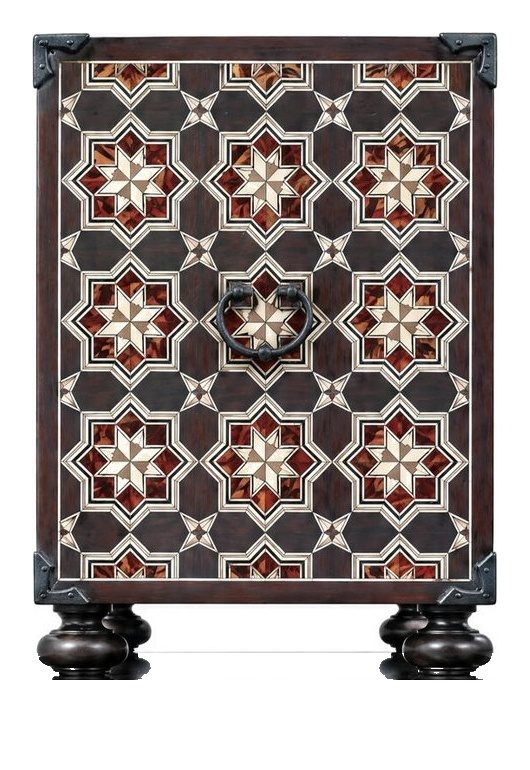
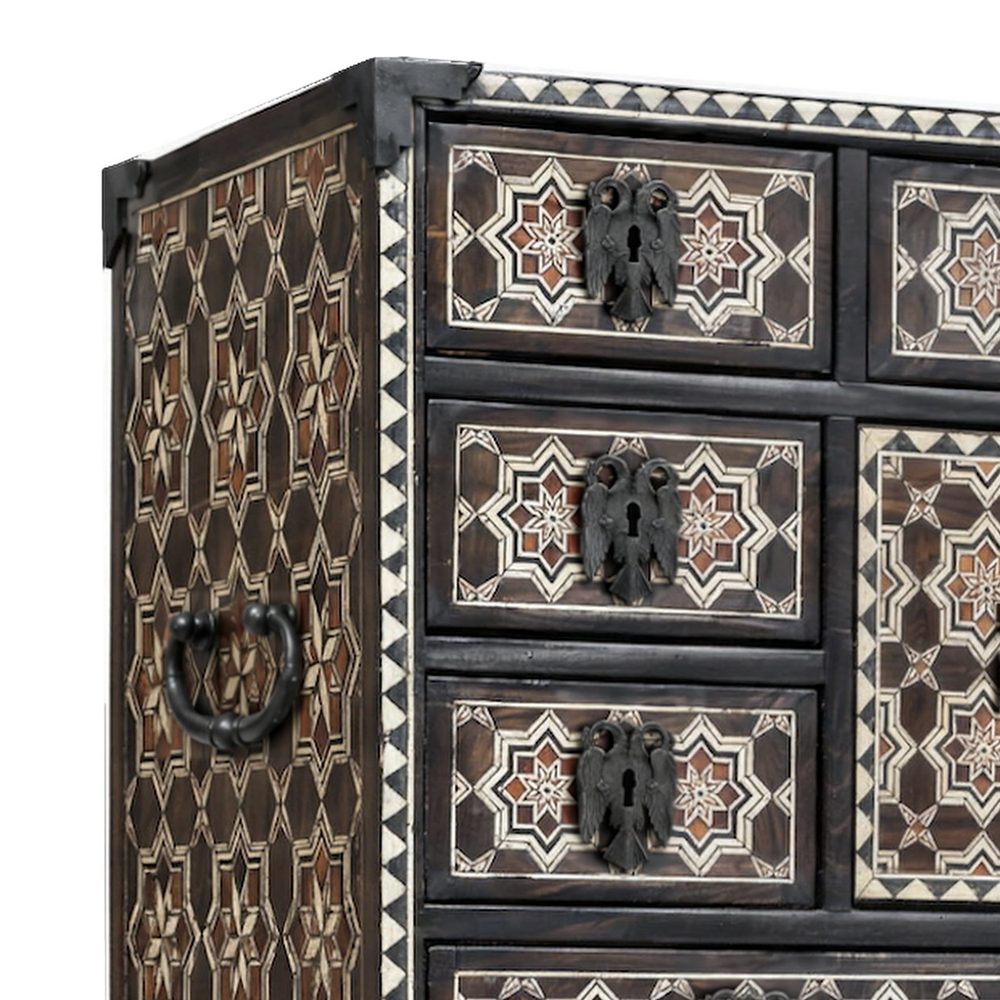
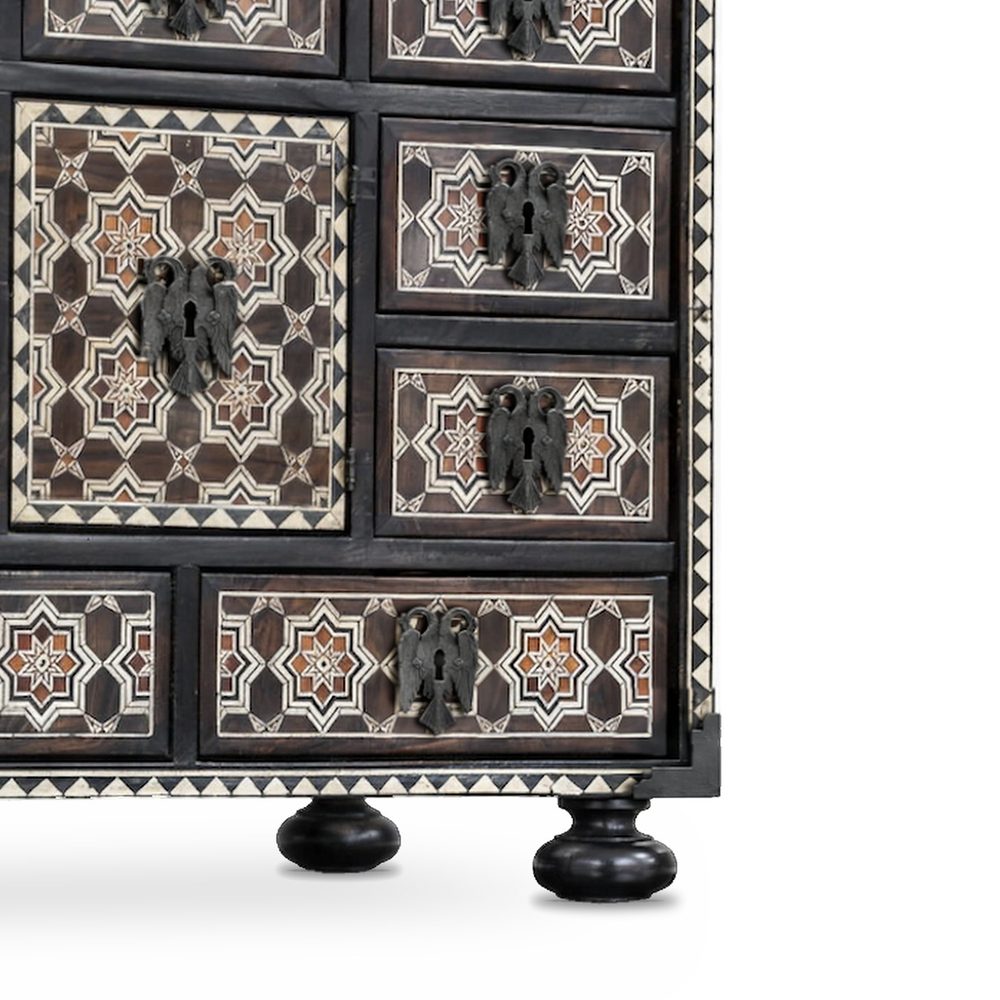
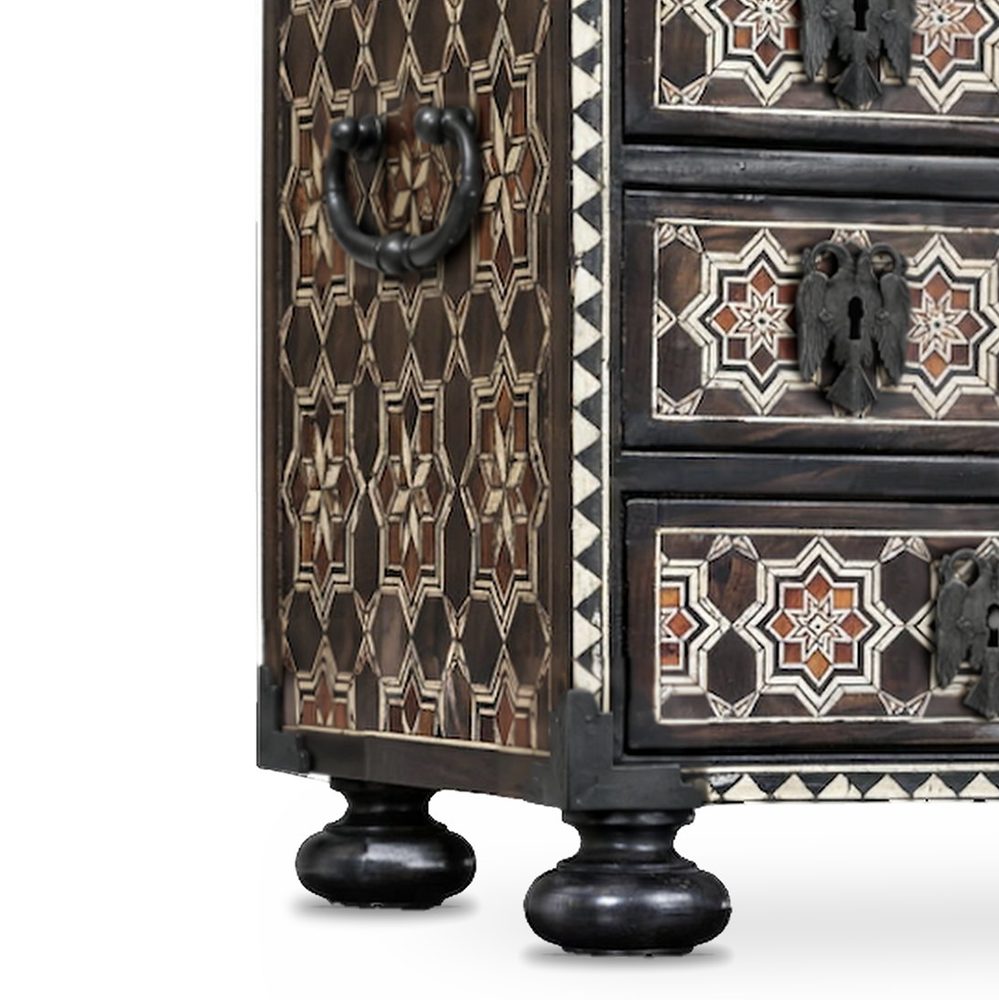
Its geometric decoration combines ebony and chechen veneers with bone inlays and imitation tortoiseshell, recalling the ornamental richness of pieces commissioned for the nobility and grand residences of the period.
The intricate inlays form elaborate geometric patterns across the drawers, central door, and sides. Antiqued iron hardware complements the decoration, while the slender base introduces a contemporary contrast to the ornamentation of the upper cabinet.
The Alcázar Cabinet revisits a tradition in which fine cabinetmaking and the decorative arts came together to create furniture of exceptional artistic value.
Where it comes from
Indo-Portuguese furniture emerged from the meeting of European cabinetmaking with the decorative techniques of the workshops of Goa and other regions of India. The Portuguese commissioned European forms from local cabinetmakers, who brought in exotic woods, bone and ivory inlays, tortoiseshell and elaborate geometric patterns.
These pieces, known as papeleras, were objects of prestige, frequently made to order. Their value lay as much in the materials as in the extraordinary precision of their decoration.
One especially interesting detail is that many combined a richly ornamented upper body with a separate stand. That characteristic is also present in the Alcázar, though reinterpreted with more slender proportions.
This tradition is documented in pieces held at the Palace of the Dukes of Bragança, in Portugal, and in European museum collections.
How it is made
The making of the Alcázar Cabinet begins with the development of its decoration, inspired by the intricate inlay techniques found in 17th-century Indo-Portuguese furniture. Before work on the cabinet itself begins, the geometric patterns, material combinations, and arrangement of decorative elements are carefully studied. Samples are produced and refined until the desired composition, contrasts, and details are achieved.
Its structure is crafted in primavera wood and veneered in ebony and chechen. These surfaces become the foundation for intricate inlay and decorative work, incorporating imitation tortoiseshell and more than 2,800 small pieces of bone, individually cut, fitted, and inlaid by hand. Each element forms part of a pattern that must remain continuous across the drawers, central door, and sides.
The drawers are built with dovetail joints, the traditional system of fine cabinetmaking: the tails are marked out and cut one by one, and the joint holds by its own geometry rather than relying on glue.
This decorative work alone requires approximately 142 hours. It is a technique that demands patience, precision, and a deep understanding of the materials. In our workshops, we preserve these traditional skills, which are becoming increasingly rare, and bring them into contemporary designs, keeping alive knowledge passed down through generations.
The iron hardware is also developed and made in our workshops. From the creation of the metal components to the hand application of patinas, every detail is crafted specifically to complement the cabinet's decoration. This capability allows us to produce our own components and remain faithful to the original design, rather than relying on what is commercially available.
The Alcázar Cabinet requires more than 250 hours of production, in addition to the time dedicated to developing samples. Its value lies in the combination of techniques, materials, and specialized knowledge involved in its creation. Behind every inlay and detail is the work of people who have spent years perfecting their craft.
In numbers